
Original Source
Physical AI Becomes New Tech Driver in 2026, Gains Popularity for 'Moving Bricks' Capability
Physical AI Emerges as a New Core Driver in the AI Industry
Since early 2026, 'Physical AI' has rapidly become a central topic in the artificial intelligence (AI) industry. Jensen Huang, CEO of NVIDIA, repeatedly emphasized at CES that "the next wave of AI will be AI operating in the physical world." Justin Sun, founder of Tron, also publicly stated recently that "the dividends of virtual AI are exhausted, and Physical AI is the biggest opportunity in the next three years." These statements from industry leaders have increased attention on the grand narrative of AI transitioning from virtual intelligence to physical execution.
From Virtual to Real: 'Perception-Reasoning-Action-Feedback' Capability
Physical AI signifies a deep integration of AI with the physical world. While traditional virtual AI focused on 'thinking and communication,' Physical AI's core capability lies in 'perceiving and acting.' This means AI is no longer just an intelligent agent on a screen, but enables autonomous machines like robots and self-driving cars to perceive, understand, and execute complex operations in the real physical world. Wang Xiang, an executive member of the China Computer Federation, systematically elaborated on this concept, stating that Physical AI refers to an AI system with "closed-loop abilities of 'perception-reasoning-action-feedback' in the real world." Simply put, if previous AI could 'chat,' current Physical AI can 'do things.'
Demonstrated by the Real Achievements of Robot Companies
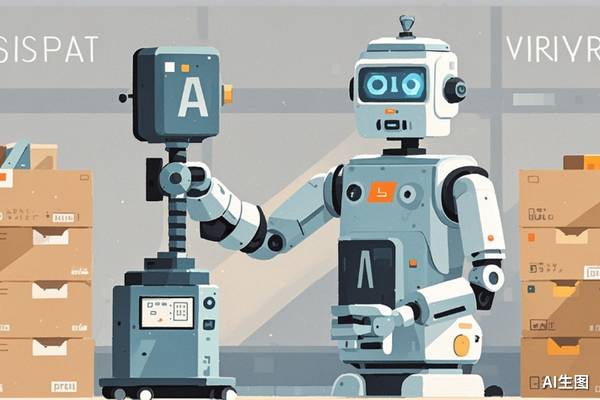
Recent developments from two star robot companies clearly illustrate this difference in Physical AI. Figure AI in the United States garnered significant attention by demonstrating that "robots can really work" through a five-day continuous live stream. During this live stream, three Figure 03 humanoid robots took turns sorting express packages on a production line. The robots skillfully handled complex tasks such as detecting barcodes, grabbing packages, readjusting their direction, and placing packages on the conveyor belt with the barcodes facing down.
*Source: 36氪 (2026-06-01)*
Related Articles
📧 Daily Newsletter
Get the daily global news briefing in your inbox every morning.
It's still free.


