LATEST
Today's top stories at a glance
#news#이란#미국#이스라엘

Original Source

You Can’t Stockpile AI: Military Advantage in the Age of Algorithmic Diffusion
📰
You Can’t Stockpile AI: Military Advantage in the Age of Algorithmic Diffusion
Modern War Institute - mwi.westpoint.edu
🕐 2026년 3월 17일 PM 03:54
Article

AI Military Advantage: Focus Shifts to Resources Amidst Rapid Diffusion

As AI technology diffuses rapidly, the US military advantage may not be as durable as in the past. In the AI era, computing resources, talent, and rapid application capabilities become more crucial than just ideas.
Tue Mar 17 2026

Reassessing Military Advantage in the AI Era: Diffusion and Competition

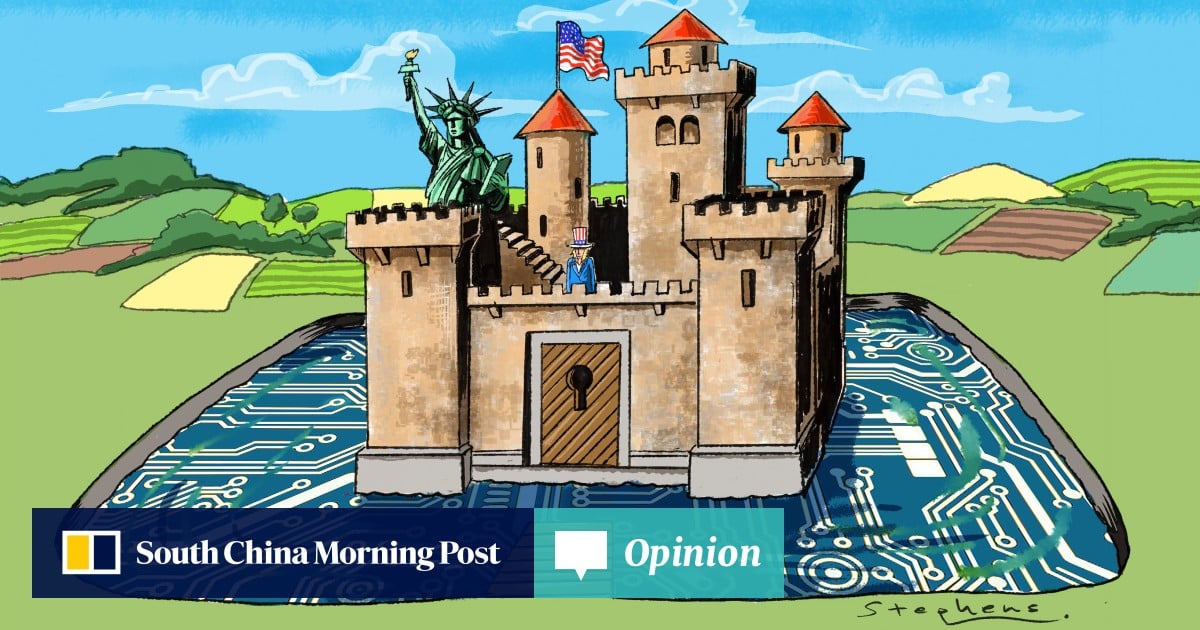
Artificial intelligence (AI) is poised to fundamentally reshape how wars are fought, and the United States holds genuine advantages in this domain. American companies develop the most capable AI models globally, dominate the advanced semiconductor supply chain, and attract private investment in AI at a rate far exceeding other nations. These strengths underpin a reasonable belief that the United States leads the global AI competition.

However, there's a growing question of whether these strengths translate into durable, exclusive military advantage. In previous technology competitions, the path from discovery to adversary replication was measured in years or decades. For AI, this timeline is compressed to months or even weeks. This rapid diffusion is due to core algorithmic innovations being freely shared across borders through open publications, open-source models, and the global movement of AI researchers. Therefore, in the AI era, military advantage shifts from who discovers breakthroughs to who commands the resources to build upon them and field them fastest—namely, compute infrastructure, talent, and the organizational capacity for rapid and scalable AI adoption.

AI vs. the Atom Bomb: Different Barriers to Diffusion

Comparing AI to previous technology races like nuclear weapons highlights fundamental differences. The physics of nuclear fission has been widely understood for nearly a century, yet only nine nations have built nuclear weapons. This disparity exists because the physical prerequisites for acting on those ideas—such as enriched uranium and precision manufacturing equipment—are scarce, controllable, and difficult to acquire. This demonstrates that ideas alone are insufficient without the compute and talent to act on them, a logic that also applies to AI.

However, the barriers to execution for AI are fundamentally different. The 'materials' of AI—compute resources and talent—are commercially available, globally distributed, and expanding in supply. Unlike nuclear materials, access to AI's core components cannot be easily restricted. This suggests that AI technology not only sees rapid diffusion of ideas but also a quicker spread of the resources needed to implement those ideas.

*Source: Modern War Institute - (2026-03-17)*

Share Facebook X Email

Related Articles