Original Source
China-US Summit: Agreement on 'Constructive Strategic Stability' for Future Ties
New Framework for China-US Relations and Its Significance
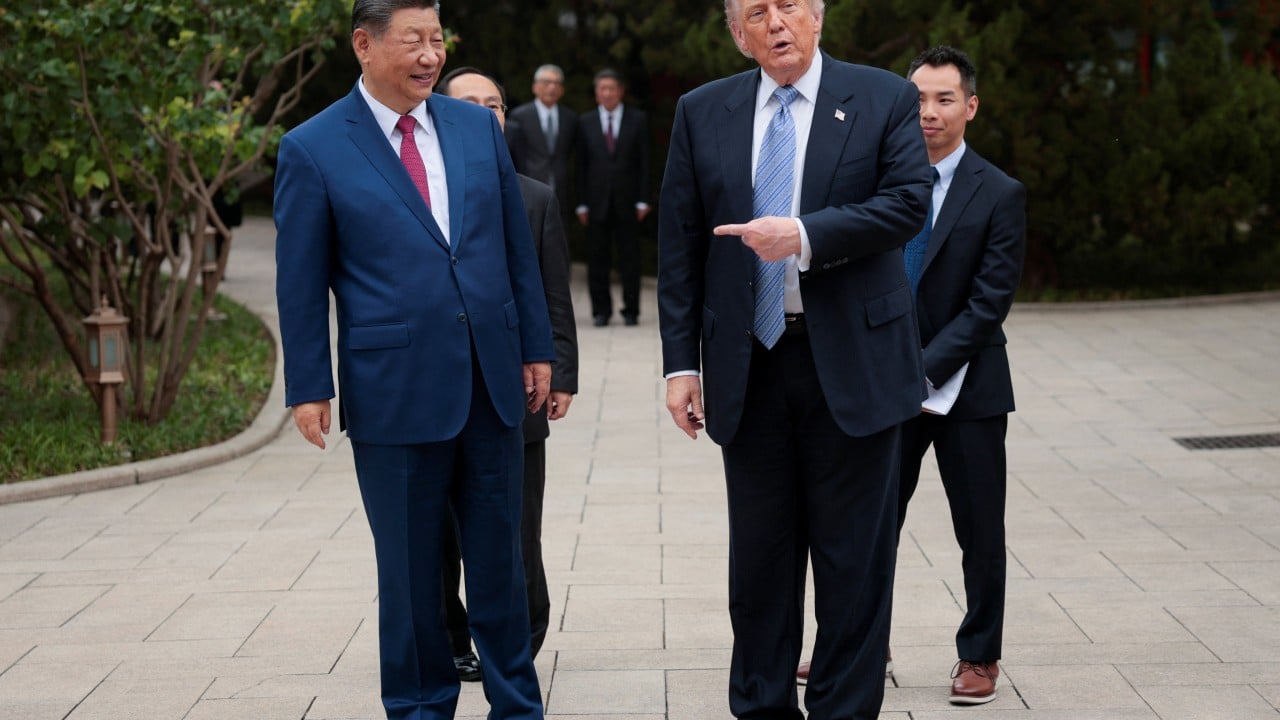
Recent summit meetings between US President Donald Trump and Chinese President Xi Jinping resulted in an agreement to establish a new framework for their relationship, termed 'constructive strategic stability.' As highlighted by CGTN anchor Xu Qinduo and Shanghai Institutes for International Studies President Chen Dongxiao, this is a bilateral agreement shared by both leaders, not a unilateral vision. Chen Dongxiao explained that this framework aims to set guardrails in a competitive environment, prioritize cooperation as the main pillar, manage differences, and ensure lasting stability. The year 2026 is particularly significant, coinciding with the start of China's 15th Five-Year Plan and the 250th anniversary of U.S. independence, marking a historic milestone for a new chapter in China-US relations.
The Taiwan Question and Economic Interdependence
The Taiwan question remains the most important and sensitive issue in China-US relations. President Xi Jinping warned that improper handling of this issue could lead to clashes or conflicts between the two countries. China views national reunification as a core national interest, accusing the U.S. of undermining the 'One China' policy and attempting to use Taiwan to contain China. Recent U.S. arms sales to Taiwan further exacerbate these tensions. Conversely, Trump's visit included prominent American business leaders like Elon Musk and Tim Cook, demonstrating the enduring strength of economic interdependence. This suggests that decoupling is proving unattainable, and China's high-tech market continues to exert a strong pull on leading U.S. technology companies.
Future and Challenges of China-US Relations
Professor Robert Ross of the John King Fairbank Center for Chinese Studies at Harvard University stated that achieving 'constructive stability' in China-US relations will be very difficult. Both countries face negotiation challenges in areas like rare earths, investments, technology, fentanyl, and tariffs. Public sentiment in the U.S. includes growing anti-China sentiment, while Chinese citizens also express concerns about sending their children to study in the U.S., indicating strain in people-to-people relations. Professor Ross noted that Trump tends to view China primarily through the lens of economic security, contrasting with previous administrations' more geopolitical and ideological frameworks. Despite these differing perceptions, sustained professional dialogue is crucial for fostering mutual understanding and contributing to the healthy development of bilateral ties.
*Source: YouTube: CGTN (2026-05-21)*
Related Articles
📧 Daily Newsletter
Get the daily global news briefing in your inbox every morning.
It's still free.