
Original Source
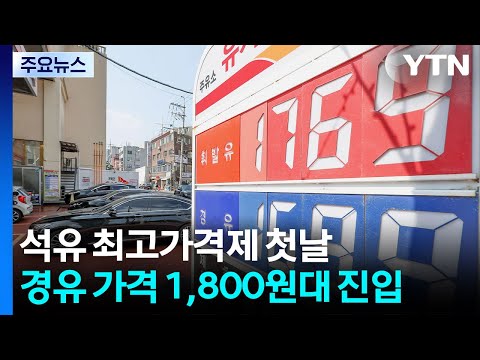
Nationwide Fuel Prices See Wider Decline on First Day of Petroleum Price Cap System Implementation
Price Cap System Takes Effect, Nationwide Fuel Prices Update
On the first day the government implemented the maximum petroleum product price system, a petroleum product price cap, after 30 years, nationwide fuel prices showed a downward trend. At Mannam-ui Gwangjang Service Area gas station in Seoul, gasoline recorded 1,799 won per liter and diesel 1,798 won, dropping 54 won and 72 won, respectively, compared to before the implementation. The nationwide average gasoline price, as of 9 AM today, fell by 14.99 won from the previous day to 1,883.79 won per liter, while the diesel price dropped by 21 won to 1,897.89 won, entering the 1,800 won range. Notably, the decline in the Seoul area was prominent, with gasoline falling by 20.66 won and diesel by 30.64 won.
Difference Between Refinery Supply Prices and Gas Station Retail Prices, Future Outlook
Currently, the government has set the maximum refinery supply price for gasoline at 1,724 won and for diesel at 1,713 won. This is lower than gas station retail prices, as gas stations set prices reflecting operating costs and profit margins. As fuel is supplied at prices lower than the maximum set by the government, there is an expectation that gas station retail prices will drop to the low 1,800 won range in the future. However, it is expected to take some time for gas stations to deplete their existing inventory and begin selling newly supplied fuel. To prevent excessive increases in gas station retail prices, the government plans to continuously operate a monitoring system.
*Source: YouTube: YTN (2026-03-13)*


